
US Market Intelligence Brief
Report as-of (US/Eastern): 2026-06-24 15:32:13 EDT
Executive summary
Report as-of (US/Eastern): 2026-06-24 15:32:13 EDT
The US market is experiencing significant volatility across trending names, with sharp divergences between winners and losers. UBER (+6.42%) leads gains on robotaxi expansion news, while AI-related names face pressure with MSTR (-9.01%) and CBRS (-18.15%) suffering major declines. The session highlights growing concerns about AI spending sustainability, with reports of companies like Uber exhausting AI budgets ahead of schedule. Traditional pharma (PFE -2.49%) continues its recent weakness amid executive departures. Volume is elevated across trending names, suggesting institutional repositioning rather than retail-driven moves.
Market regime check
Without broader market ETF data available, individual stock performance suggests a risk-off environment for speculative AI plays while established tech platforms with clear monetization paths (UBER) find support. The 18% decline in CBRS and 9% drop in MSTR indicate investors are reassessing AI infrastructure valuations amid budget reality checks. High volume across all trending names (25M+ for UBER, 31M+ for MSTR) suggests institutional deleveraging in momentum trades.
Why these names are trending
UBER gains momentum on London robotaxi expansion despite AI budget concerns – the autonomous vehicle narrative outweighs near-term spending issues. Weekly (+1.22%) and monthly (+3.23%) trends support the rally.
MSTR faces severe selling pressure as analysts urge CEO to halt Bitcoin purchases due to cash concerns. The stock has collapsed from $474 highs to $94, with weekly (-23.07%) and monthly (-40.91%) declines accelerating.
CBRS suffers an 18% single-day decline with no specific catalyst visible, suggesting either earnings disappointment or sector rotation away from AI infrastructure plays.
PFE extends recent weakness (-7.44% weekly, -6.94% monthly) as CFO David Denton departs for Nike, raising talent retention concerns in the pharma giant.
Key news drivers
- AI Budget Reality Check: Multiple reports indicate companies including Uber have exhausted AI budgets faster than expected, creating sector-wide reassessment of AI spending sustainability.
- Robotaxi Expansion: Uber's London autonomous vehicle partnership with Autobrains represents significant geographic expansion of the robotaxi opportunity.
- Executive Talent Migration: Pfizer's CFO departure to Nike highlights ongoing talent competition between traditional and growth sectors.
- Bitcoin Correlation Pressure: MSTR's decline reflects both Bitcoin weakness and growing analyst concern about the company's crypto acquisition strategy.
Durable momentum ideas
UBER (Bullish): The robotaxi narrative provides multi-year growth optionality while the core rideshare business generates consistent cash flow. AI budget concerns are near-term noise versus the autonomous vehicle opportunity. Large-cap stability with growth catalysts supports sustained momentum.
MSTR (Bearish): The Bitcoin proxy trade faces fundamental challenges as cash reserves dwindle and analysts question the acquisition strategy. Breaking below $100 psychological support opens downside to $80-85 range. Momentum likely persists until Bitcoin stabilizes or company changes strategy.
PFE (Bearish): Pharma sector headwinds combined with executive departures suggest continued pressure. The stock's inability to hold $25 support indicates further downside potential toward $22-23 range.
Options / structure ideas
*This is educational analysis and not financial advice.*
UBER – Primary: CALL
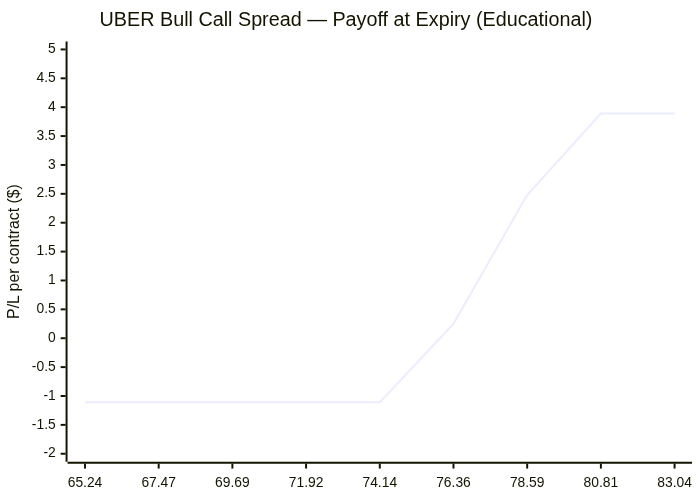
- Call debit spread: Buy 74C / Sell 77C (Jul 2) targeting robotaxi momentum
- Put structure: Cash-secured puts at 70-72 strikes for pullback entry
- Rationale: Positive news flow supports near-term upside despite AI concerns
MSTR – Primary: PUT
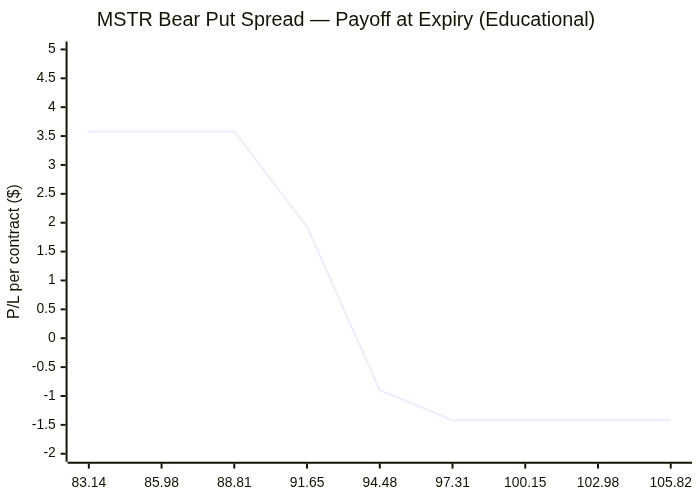
- Put debit spread: Buy 95P / Sell 90P (Jul 2) on continued Bitcoin weakness
- Call structure: Short call spreads at 100-105 resistance if bounce attempts
- Rationale: Analyst downgrades and cash concerns support further decline
CBRS – Primary: PUT
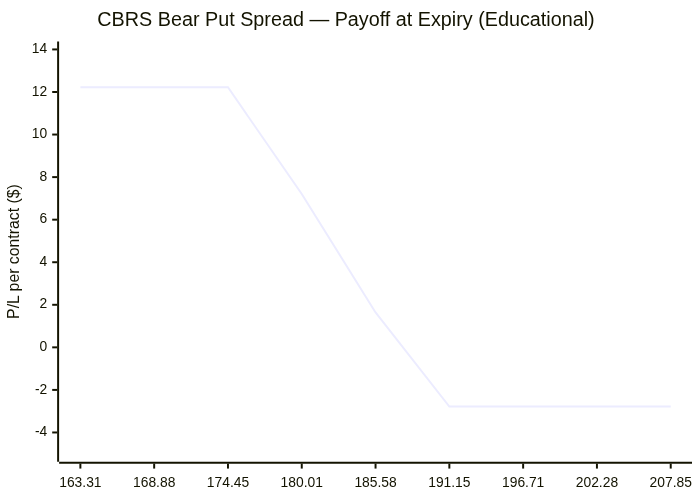
- Put debit spread: 185P / 175P (Jul 2) on momentum continuation
- Call structure: Covered calls only if holding shares
- Rationale: 18% decline suggests material negative catalyst with follow-through likely
PFE – Primary: PUT
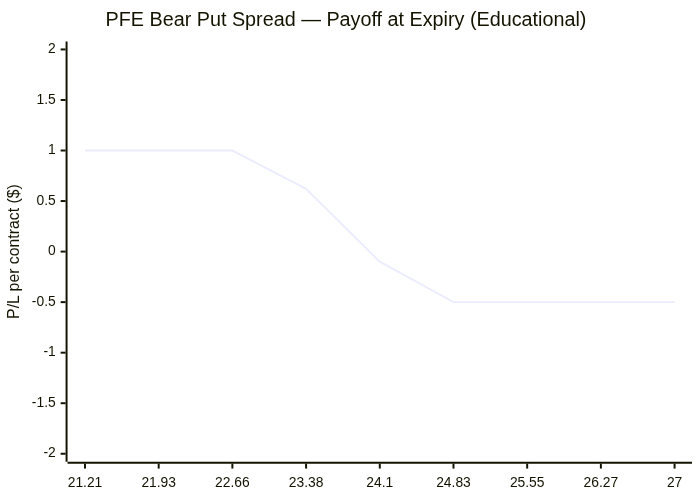
- Put debit spread: 24P / 23P (Jul 2) on executive departure concerns
- Call structure: Covered calls against existing positions only
- Rationale: Talent drain narrative supports continued weakness
Risks & watch-outs
Macro risks: AI spending reassessment could spread beyond current names to broader tech sector. Bitcoin volatility remains key driver for MSTR correlation.
Stock-specific risks:
- UBER: AI budget overruns could pressure margins more than expected
- MSTR: Forced Bitcoin selling if cash position deteriorates further
- CBRS: Unknown catalyst behind 18% decline could reverse quickly
- PFE: Pharma sector rotation or pipeline news could spark reversal
Technical risks: High implied volatility (80%+ on MSTR puts, 95%+ on CBRS) makes options expensive. Short-dated structures face significant time decay with only 8 days to July 2nd expiry.
Liquidity concerns: While ATM options show decent volume, bid-ask spreads widen quickly on out-of-the-money strikes. Size positions appropriately for available liquidity.
Visual strategy maps
Payoff curves and entry/exit zones below are educational aids — not trade instructions. Confirm with your own chart, liquidity, and risk limits.
MSTR: Bear Put Spread
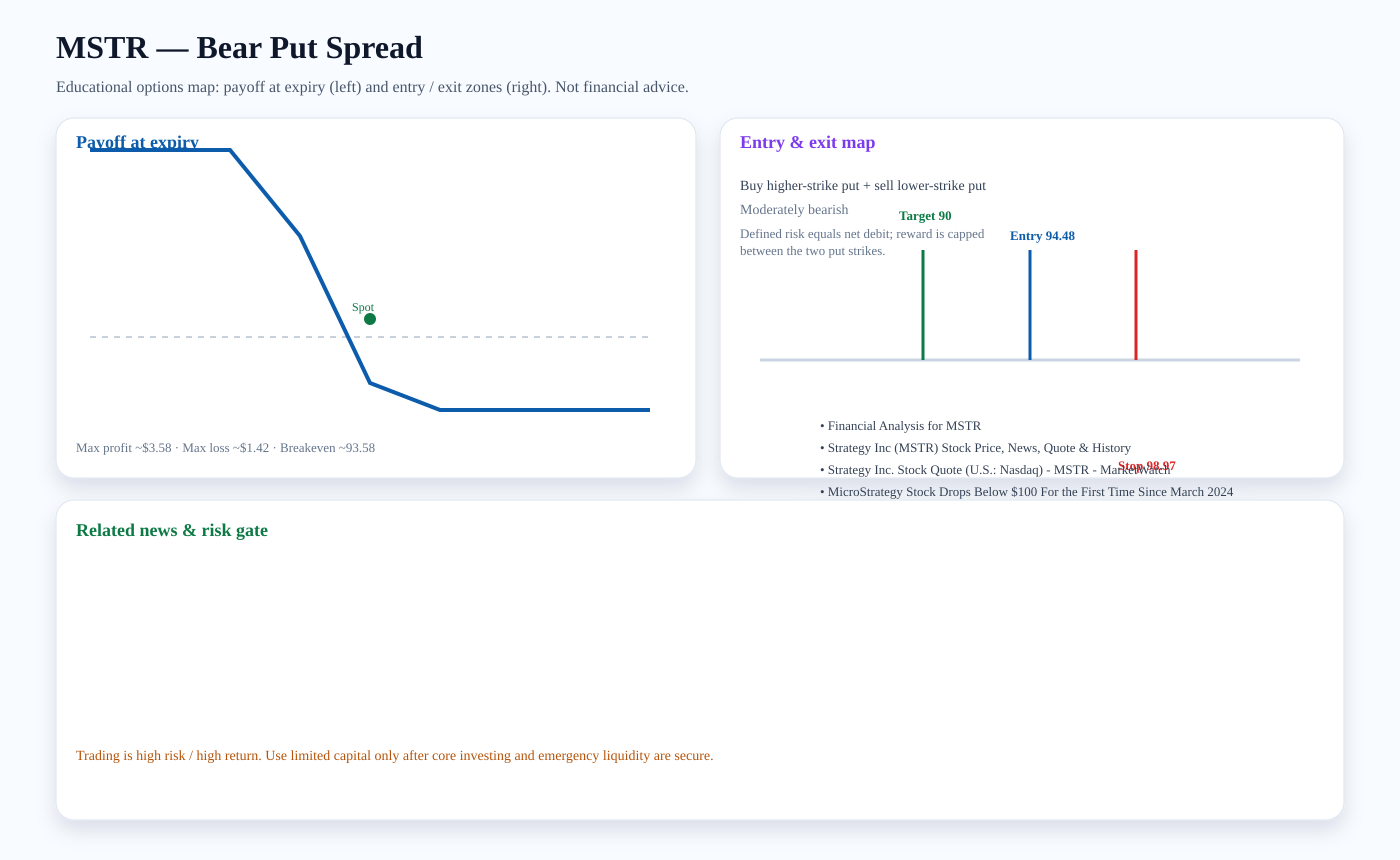
Structure: Buy higher-strike put + sell lower-strike put
Outlook: Moderately bearish
Entry zone: ~94.48 · Target: ~90 · Stop: ~98.97 · Breakeven: ~93.58
Risk note: Defined risk equals net debit; reward is capped between the two put strikes.
Related news links:
Payoff chart (Mermaid):
Entry / exit map (Mermaid):

CBRS: Bear Put Spread
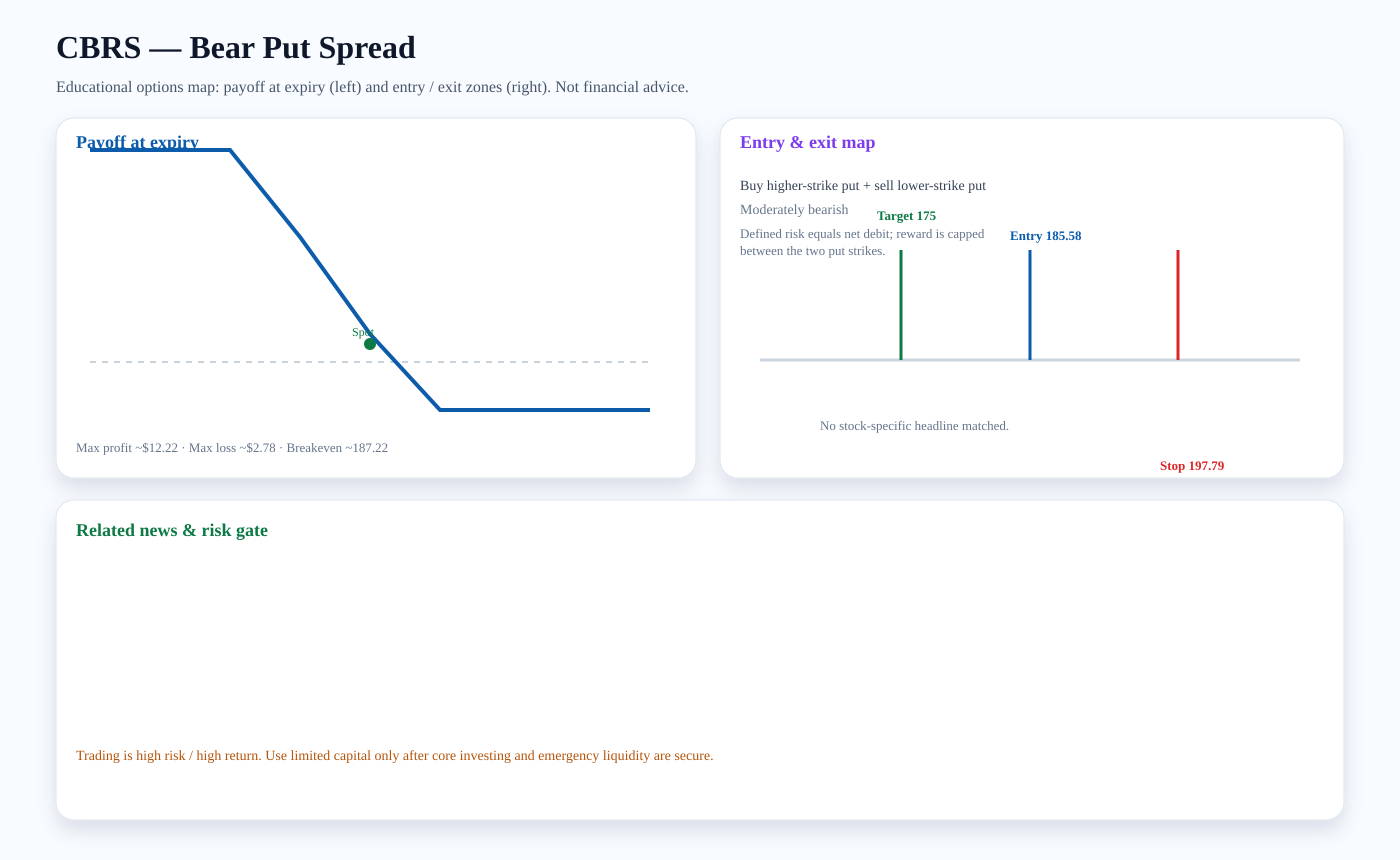
Structure: Buy higher-strike put + sell lower-strike put
Outlook: Moderately bearish
Entry zone: ~185.58 · Target: ~175 · Stop: ~197.79 · Breakeven: ~187.22
Risk note: Defined risk equals net debit; reward is capped between the two put strikes.
Payoff chart (Mermaid):
Entry / exit map (Mermaid):

PFE: Bear Put Spread
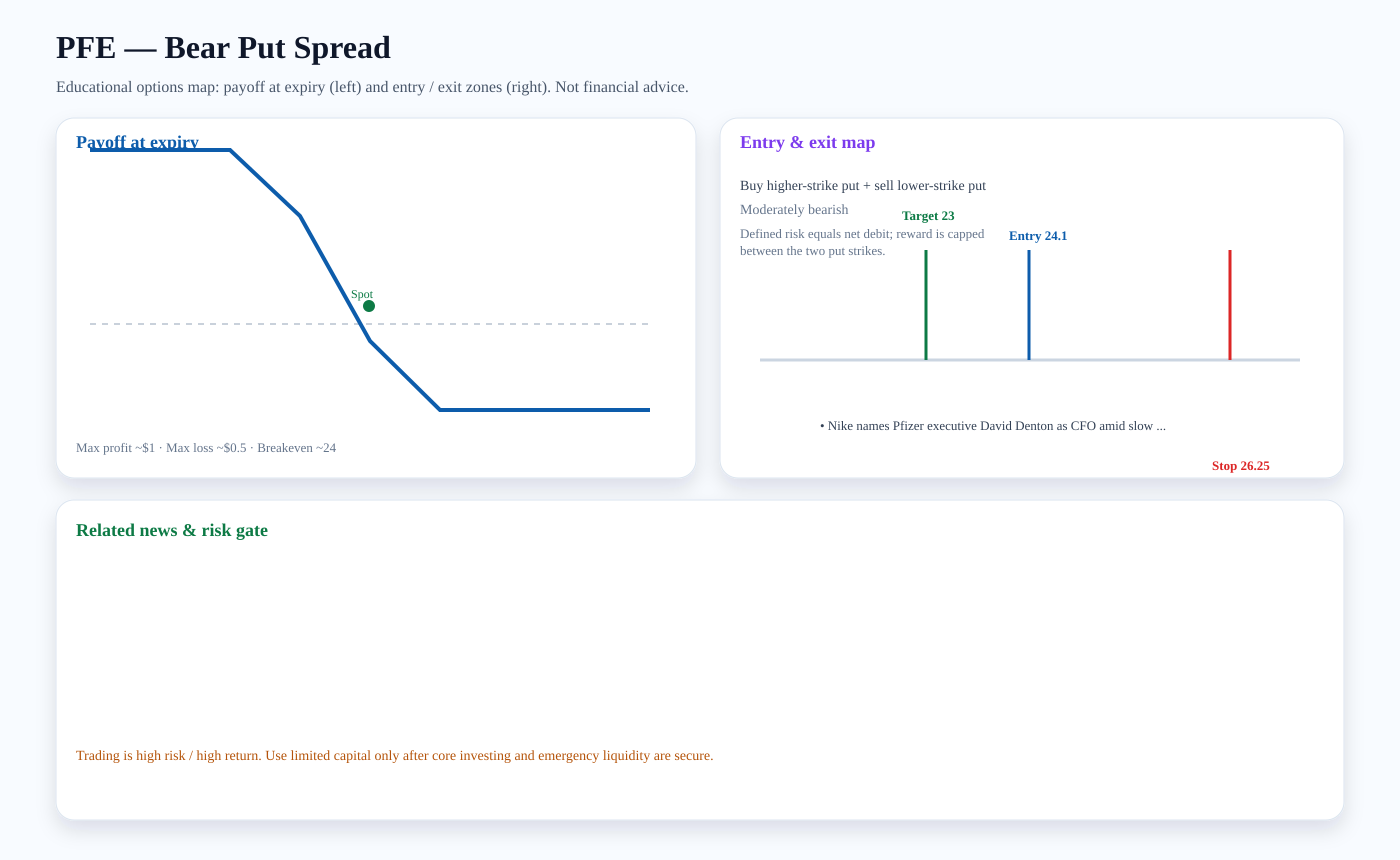
Structure: Buy higher-strike put + sell lower-strike put
Outlook: Moderately bearish
Entry zone: ~24.1 · Target: ~23 · Stop: ~26.25 · Breakeven: ~24
Risk note: Defined risk equals net debit; reward is capped between the two put strikes.
Related news links:
Payoff chart (Mermaid):
Entry / exit map (Mermaid):

UBER: Bull Call Spread
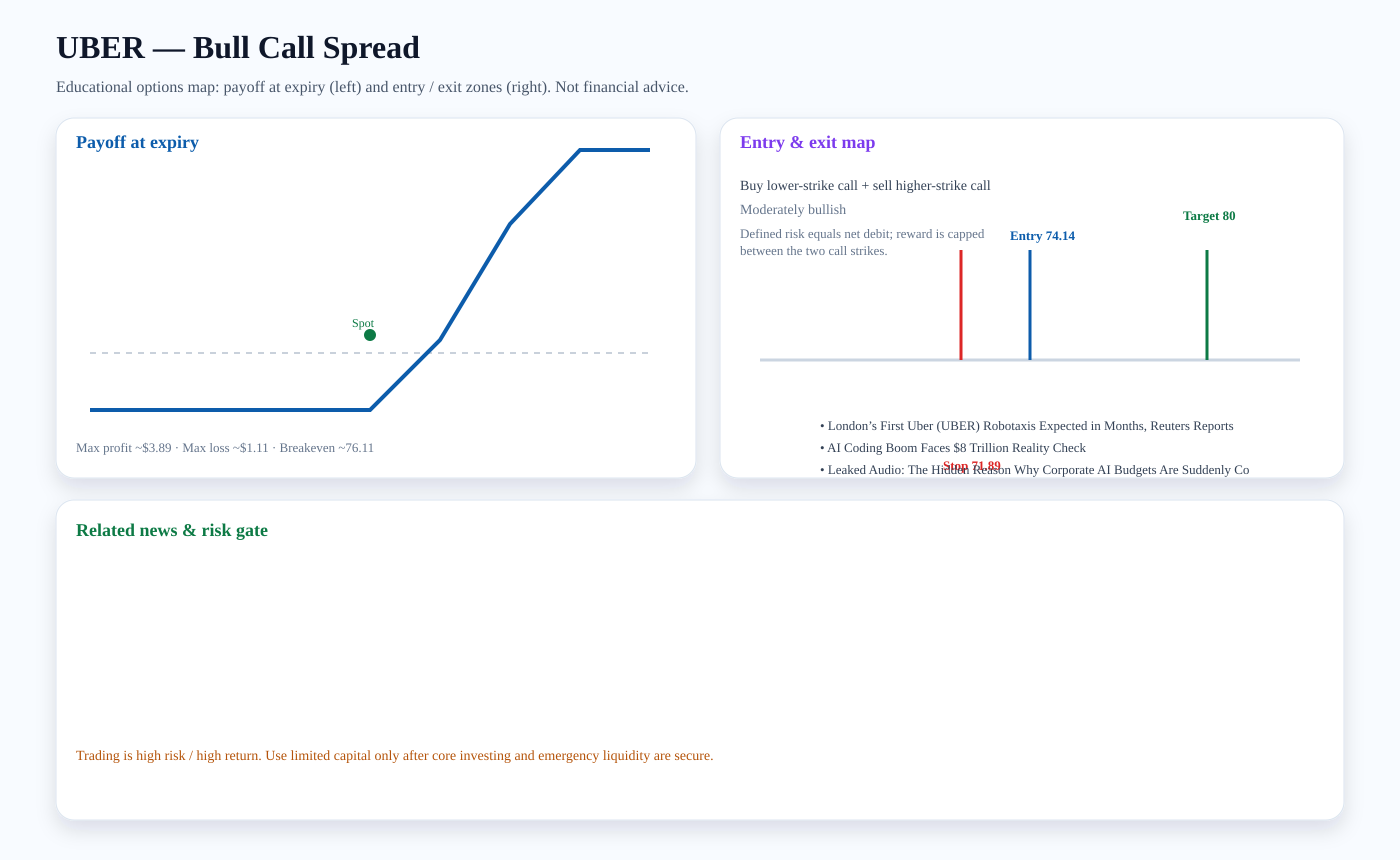
Structure: Buy lower-strike call + sell higher-strike call
Outlook: Moderately bullish
Entry zone: ~74.14 · Target: ~80 · Stop: ~71.89 · Breakeven: ~76.11
Risk note: Defined risk equals net debit; reward is capped between the two call strikes.
Related news links:
Payoff chart (Mermaid):
Entry / exit map (Mermaid):

Trading versus investing
Investing focuses on durable ownership, diversification, and compounding. Trading seeks faster tactical returns and carries higher risk. We treat options trading as limited-capital, educational analysis only after core investment capital and emergency liquidity are protected.
PDF report — Premium
Premium members get the full PDF attached to email briefs and can download it here. Upgrade for just $2 a month.
Subscribe for $2/month